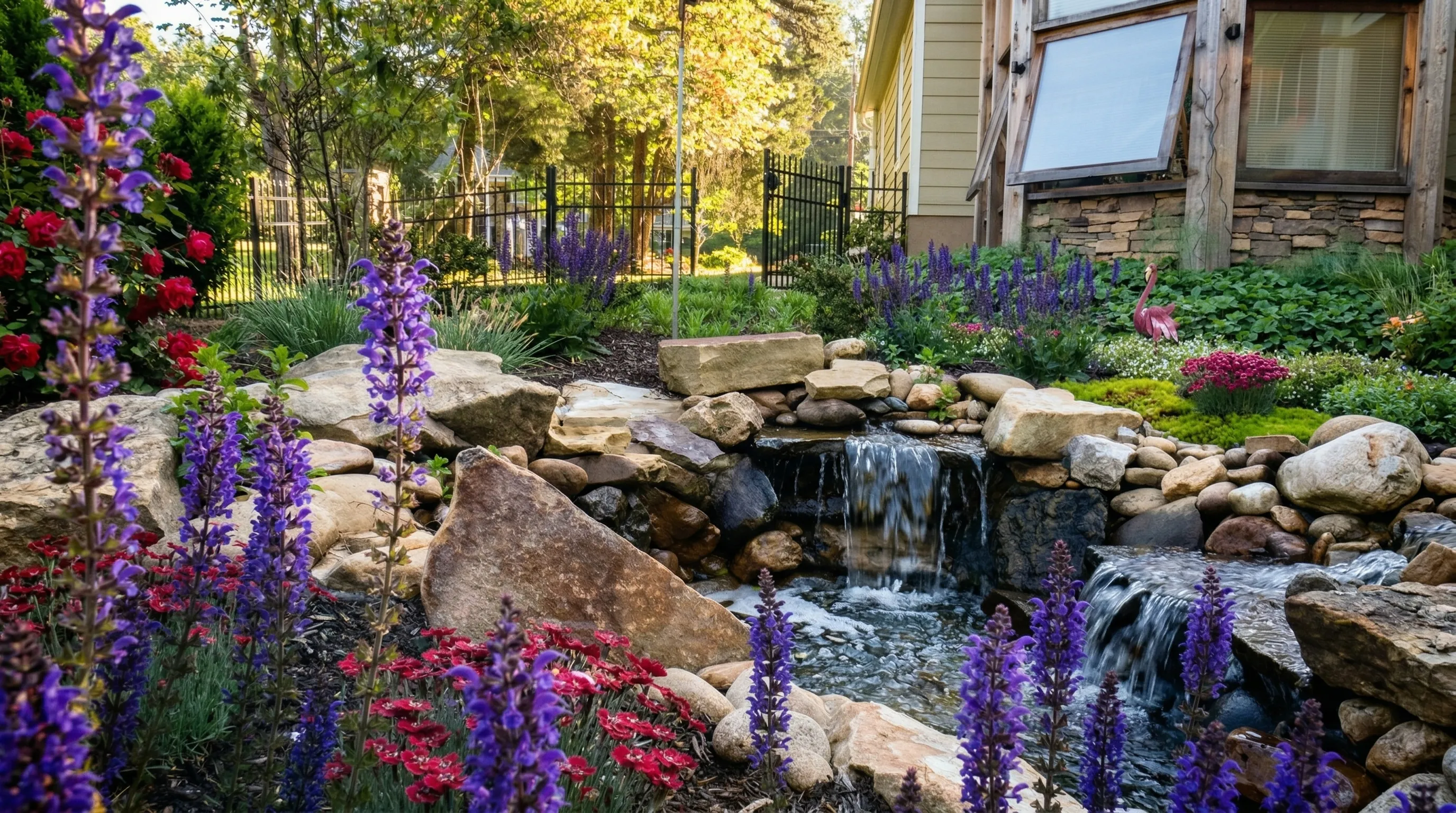
Water Features
Stuart Row Landscapes has been Knoxville’s specialist in water feature design and installation since 1995. Water is what transforms a landscape from a garden into a living environment — the sound of a waterfall, the movement of a stream, the stillness of a reflecting pool. It’s the element that makes an outdoor space feel alive.
What We Design and Build
- Cascading waterfalls — natural boulder construction, multiple tiers, designed to sound as good as they look
- Streams and creek beds — meandering water features that move through a landscape like they’ve always been there
- Koi and garden ponds — complete ecosystems with filtration, aeration, and aquatic plantings
- Pondless waterfalls — the beauty and sound of falling water without a standing pond, ideal for families with small children
- Bubbling boulders and urns — compact water features for smaller spaces or courtyard gardens
- Formal fountains — architectural water features for entries, courtyards, and commercial properties
How We Design Water Features
Water features fail when they look like they were dropped into a yard. Ours succeed because they’re designed as part of the landscape from the beginning — integrated with plantings, stone work, and the natural grade of the land.
Our process:
- Site assessment — evaluating slope, drainage, proximity to trees (leaf load matters), and sight lines from the house
- Sound design — the height and width of each fall determines the sound. We tune this during design so the water sounds natural, not like a faucet
- Ecological balance — for ponds, we design complete ecosystems: proper depth zones, aquatic plants, biological filtration, and aeration
- Structural engineering — liner selection, underlayment, pump sizing, plumbing, and electrical. The parts you don’t see are what make it work for 20 years
- Naturalistic stone placement — boulders and flagstone placed to look like they were uncovered, not stacked
Built for the Long Run
Every pump, liner, and fitting we install is commercial-grade. Our plumbing runs are designed for easy winterization and maintenance access. We use EPDM rubber liners (not PVC) for their flexibility and 20+ year lifespan. Skimmer and biological filter systems keep water clear without chemical treatments.
This isn’t decorative plumbing — it’s ecology and engineering working together.
Water Features in East Tennessee
Knoxville’s climate is well-suited to year-round water features. Winters are mild enough that many systems can run continuously with minimal freeze protection. The region’s natural landscape — with its creeks, waterfalls, and wooded ravines — provides the perfect design vocabulary for naturalistic water features that feel genuinely rooted in place.
How much does a backyard water feature cost in Knoxville?
+
Backyard water features in Knoxville range widely — a simple bubbling boulder or fountain might start in the low thousands, while a full waterfall-and-stream system with a pond can be a significant investment. The cost depends on size, materials, pump systems, and how integrated it is with the surrounding landscape. We'll walk your property and give you a clear scope and estimate.
Do water features require a lot of maintenance?
+
Less than most people think. A well-designed water feature with proper filtration and circulation is largely self-maintaining. You'll need occasional cleaning, seasonal pump checks, and leaf removal in fall. We design our systems for minimal maintenance — the water should work for you, not become another chore.
Can you build a water feature on a slope?
+
Slopes are actually ideal for water features. Gravity does the visual work — water cascading down a natural grade looks and sounds more authentic than a flat-ground feature. Many of our best waterfall projects take advantage of East Tennessee's hilly terrain.
Will a water feature attract mosquitoes?
+
Not if it's designed correctly. Mosquitoes breed in still water. Our water features use continuous circulation pumps that keep water moving, which prevents mosquito breeding. Flowing water actually attracts beneficial wildlife — birds, dragonflies, and frogs — which further control mosquito populations.
Ready to get started?
Every project begins with a conversation about your land, your vision, and how you want to live outside.
Start a Conversation